

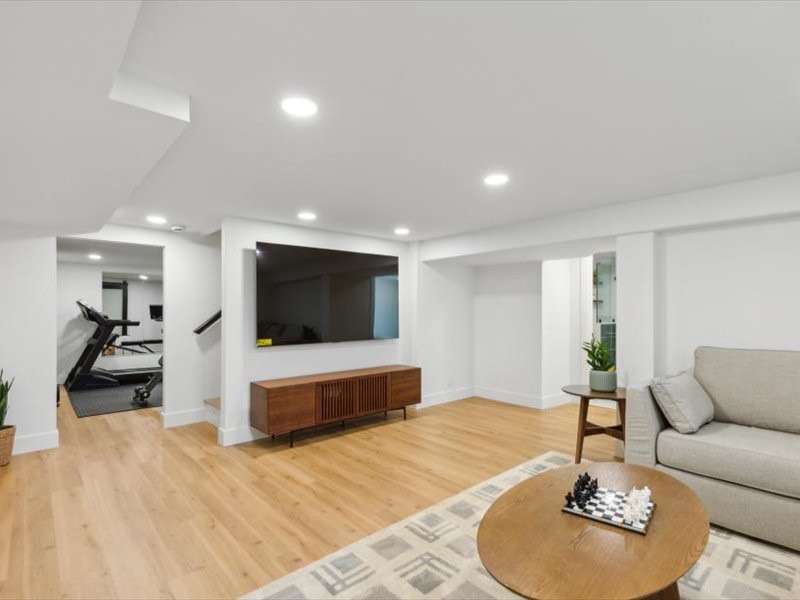
You’re not imagining it: that basement you just finished still feels a little clammy underfoot in March, and a bit chilly even after the heat kicks on. Central Indiana basements ride a constant roller coaster of damp concrete, spring rains, humid summers, and cold snaps. That’s exactly why so many homeowners look at luxury vinyl for lower levels — but it has to be chosen and installed with moisture and temperature in mind.
Below are the key decisions that make luxury vinyl a smart, comfortable choice downstairs instead of an expensive mistake.
Why Luxury Vinyl Works So Well Below Grade
Basements sit below the frost line, so the concrete stays cool and can hold moisture even when the air feels dry. Luxury vinyl plank (LVP) and tile (LVT) are built to handle that environment better than many traditional materials.
Well-made products have:
- A waterproof surface layer that shrugs off minor spills and tracked‑in snow
- A dimensionally stable core that resists warping when temperatures swing
- A tough wear layer that stands up to kids, pets, and rolling chairs
If you’re comparing specific lines, browsing current luxury vinyl plank options can help you see how different cores, thicknesses, and wear layers are built for below‑grade use.
Key point: Look for products specifically rated for “below‑grade” installation and backed by a moisture‑appropriate warranty. Not every vinyl that works upstairs belongs on a basement slab.
Moisture: Managing the Concrete, Not Just the Planks
“Waterproof” flooring doesn’t mean the subfloor underneath can be ignored. Concrete in our area often carries vapor from the soil, and if that moisture has nowhere to go it can cause adhesive failures, odors, or even mold in walls and baseboards.
A solid plan typically includes:
- Moisture testing the slab. Professional installers use industry‑standard tests to check vapor levels before committing to a floating or glue‑down approach.
- Choosing the right construction. Rigid-core products paired with the right underlayment handle vapor differently than flexible glue‑down vinyl; one may be safer than the other in your specific basement.
- Planning for true “wet” zones. Near exterior doors, sumps, or utility sinks, you may want to compare broader waterproof flooring options so those areas get extra protection.
Rule of thumb: Luxury vinyl handles day‑to‑day dampness very well, but standing water from a leak or backup is still a problem. Good drainage, a healthy sump system, and dehumidification are just as important as the product you choose.
Cold Floors: Underlayments, Layouts, and Comfort
Even when moisture is under control, bare concrete will always feel cooler than the main level. Luxury vinyl takes the edge off, but comfort comes down to the full system, not just the plank.
A few ways to keep a basement TV room or play space from feeling like a garage:
- Use an appropriate underlayment. Many LVP lines are available with attached pad; in other cases, a separate underlayment rated for basements adds warmth, cushioning, and sound control between the slab and the floor.
- Think about room use. In a home theater or kids’ playroom, you may want extra softness underfoot in certain zones. Some families layer in custom rugs on top of vinyl; our area rug catalog includes options you can size to fit seating groups without trapping moisture.
- Plan for noise. Open stairwells and hard basement ceilings can make footsteps echo. Underlayment choices and plank construction both influence how quiet the room feels.
If you’re still deciding whether vinyl is the right balance of warmth and durability, it can help to compare it with hardwood species and styles that are better suited to main levels and upper floors. Often, the best solution is wood upstairs and vinyl below.
Getting Basement‑Ready Luxury Vinyl Installed the Right Way
Basement performance is as much about preparation as product. A thoughtful install process should include:
- Inspecting for cracks, previous water damage, or efflorescence on the slab
- Addressing low spots or uneven areas so planks lock together tightly
- Choosing expansion gaps and transitions that allow the floor to move with seasonal changes
Those steps are part of a broader set of services we offer across Central Indiana; you can see everything our team handles from subfloor repair to full residential installation.
If you’re more of a “see and feel it” person, visiting our Westfield and Noblesville showrooms lets you compare different vinyl constructions side by side and talk through what makes sense for your specific basement — whether you’re in a new build north of town or updating an older home closer to Indianapolis.
Ready to Plan a Basement Floor That Feels Dry and Comfortable?
A below‑grade project has more moving parts than a simple bedroom re‑carpet, but with the right testing, materials, and installation plan, luxury vinyl can turn a chilly slab into a space your family actually wants to use. If you’d like one of our project specialists to look at your basement and walk you through moisture, cold, and comfort step by step, you can request a free estimate to get started.


